
I Couldn't See The Floor For Clothes.
Then I started journaling. Session tonight. Link inside!

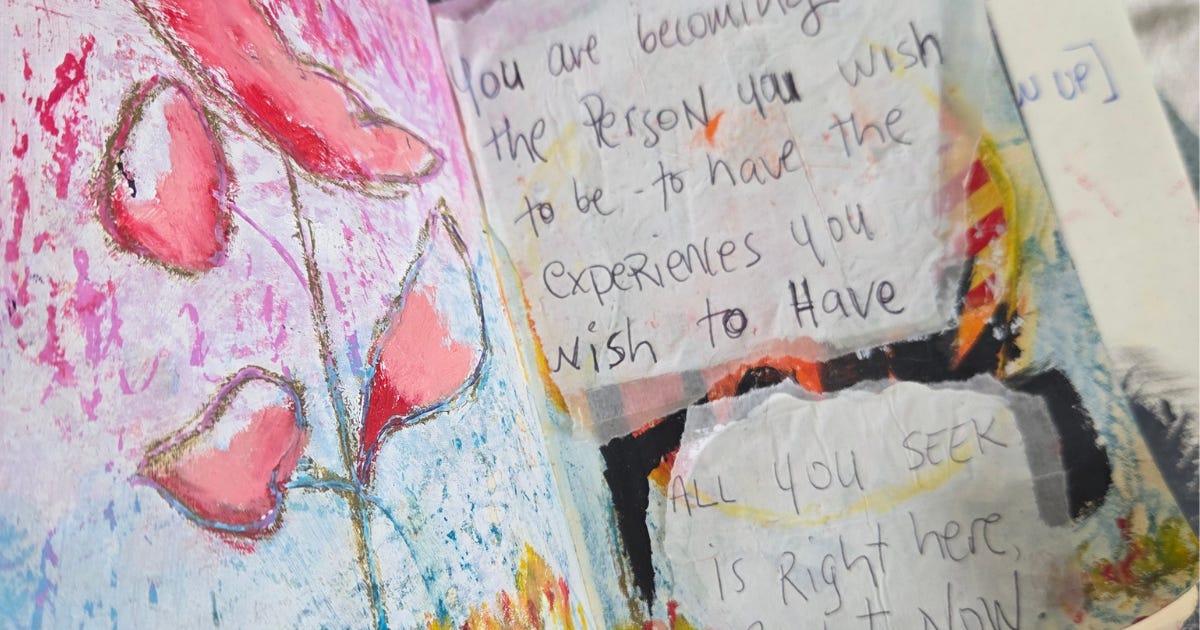
For most of my adult life, I struggled to manage my living spaces. I had two modes. One was ‘Organised’ - only because I’d spent an entire weekend actually picking up after myself, but this would only happen occassionaly and as a reaction to the mess having led to a meltdown - plus it took literal days and the result was always temporary.
The other was chaos.
Clothes on the floor. Baskets & bags, unpacked & overflowing. The wardrobe door blocked by a pile of laundry I keep promising to deal with ‘later’. The bed unmade because usually I’m late for something and or I simply don’t have the dopamine.
So I’d just close the door and hope nobody would enter before I got around to ‘sorting it out’, you know, later.
I used to think this was because I was lazy. Or messy. “Bad at adulting” or my personal favourite framing of my entire self as “A Disaster”; a deeply unhelpful and cruel identity I’m still at 50 years of age, detaching from.
Of course I didn’t know until recent years about nervous system regulation. So once I started learning about it, I began tracking mine through my journaling practice.
Not in a routine, ‘productive’, prescriptive way. Just messy, honest writing & art about what I was actually noticing. What I was feeling. What kept happening. What I kept avoiding. What I wanted that I couldn’t quite name.
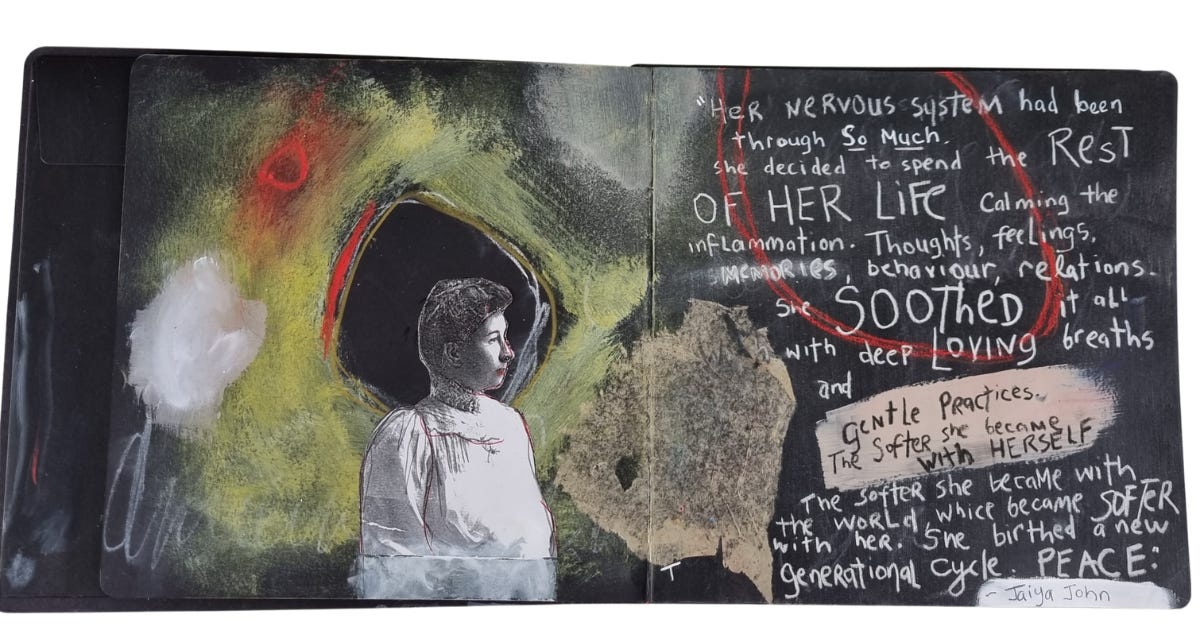
And slowly — over years, not weeks — something shifted.
It wasn’t that I became tidy. I’m still messy. Let me be very clear about that.
What changed was that I started to notice. I noticed that I felt worse when my spaces were chaotic. I noticed that I slept better when there was less visual noise in my bedroom.
I noticed that candles and ambient lighting did something to my body that overhead lights didn’t. I noticed I felt held by certain textures and aggravated by others.
I noticed that my environment was talking to my nervous system all the time and that I’d been ignoring what it was saying for most of my life.
There’s a name for this, it turns out. Stephen Porges calls it neuroception — the unconscious detection of safety or threat cues in our surroundings, happening below the level of conscious awareness.
Your body is always reading the room. Deb Dana, who’s brought polyvagal theory beautifully into therapeutic practice, calls the small environmental cues of safety glimmers; the opposite of triggers.
Isn’t that fab?
I didn’t know any of this language when I started. I just had a journal and the slowly-built habit of documenting what I noticed.
What the journal was doing, what it’s still doing, all these years on, was training me to be a space-holder for myself.
Someone who could pay attention to what her own system was asking for, instead of overriding it, instead of outsourcing the answer to whoever was loudest in the room.
Journaling also helped me unpack my anxiety & resentment around imposed standards, most of which I had internalised. These were manifesting as power struggles in relation to the tasks associated with the maintaining of more regulating spaces.
Once they ceased to be exclusively associated with morality or some kind of 'aesthetic respectability' and became instead about nervous system care, the power struggles too, were transformed.
The tidy bedroom (-ish; let’s not oversell it) isn’t the point. It’s a side effect. The point is that I learned how to listen to myself and over time, transform something that has made a huge difference to my daily experience of life.
The room is just one piece of evidence of that.
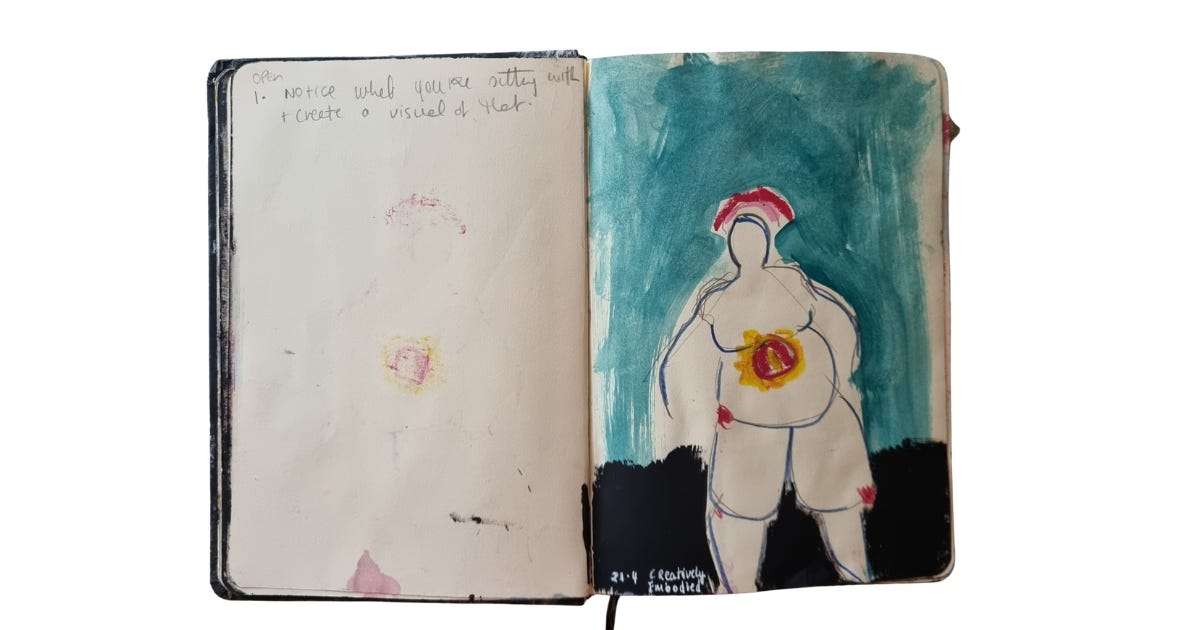
This is what journaling has given me, in no particular order:
The ability to tell the difference between a real yes and a people pleasing yes
A real relationship with my own emotions instead of being at odds with, afraid or ashamed of them
The capacity to notice when I’m making a decision from a wound instead of from a regulated space
A nervous system that’s learning, slowly, to trust me
And, yes, spaces [and people] I actually want to spend time in [and with] and the superpower of being able to create [and meet] them, everywhere I go.
I don’t pretend journaling is a magic trick. It is however the most reliable practice I know for coming home to yourself. And I think doing it alongside other women doing the same thing can make the practice deeper than doing it alone.
Which is why I host weekly community journaling sessions on Zoom for my paying subscribers - zoom on, journals open, one hour of guided, witnessed, gentle time.
No pressure. No expectation. No sharing unless you want to. Just the practice of holding time and space for ourselves & each other, together.
How to join us:
The weekly sessions are part of my Substack subscription — €10/month or €110/year. That includes:
Weekly online journaling sessions (right now we meet Wednesdays 7pm Irish time but times will vary)
All my writing here plus exclusive access to worksheets, prompts & practices from the archive.
The wider community of women doing this work together
If you’re already subscribed — scroll down for the details & see you later!
Amanda xx